Fond Memories of Brazil 2009: Rio de Janeiro + Búzios (Part 1)

This is the second to the last post of my “Fond Memories of Brazil 2009” series. I wish I could say that we saved the best of our Brazil experience for last, but as you can probably guess from my overly enthusiastic posts about Jericoacoara and Salvador, those two places were the ones that really stole our hearts. But to be fair to Rio, we would’ve enjoyed our time there a lot more had Mother Nature played nice. All we wanted to do in Rio was go hang gliding and lay out on its world famous beaches, but, spoiler alert, we did neither.
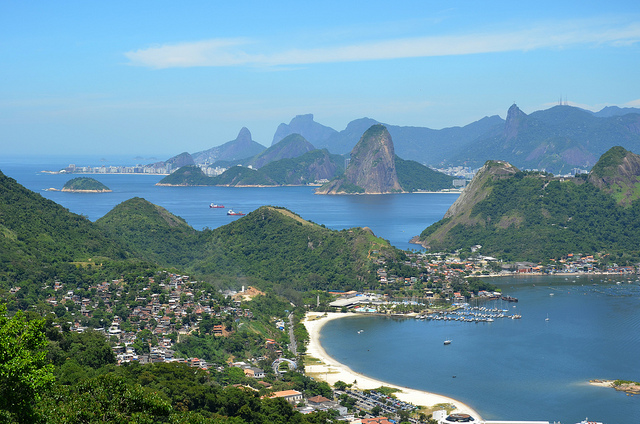
Gorgeous Rio de Janeiro: photo credit Rodrigo Soldon

Gorgeous Rio de Janeiro: photo credit Rodrigo Soldon

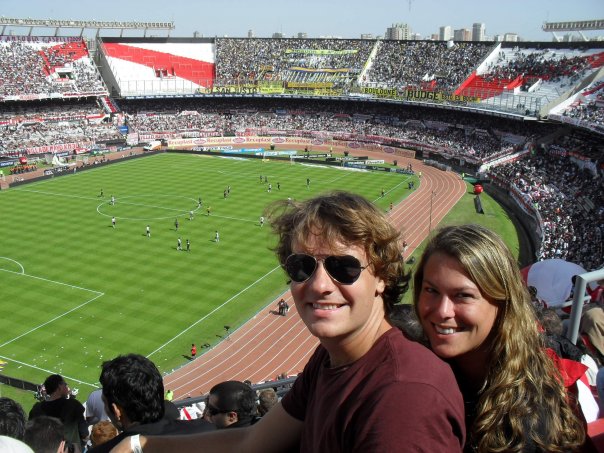
We did, however, still get to watch a soccer match at Maracanã and visit Búzios, a posh nearby beach town, with one of my friends from college who was living in São Paulo at the time. I know that most of these “Fond Memories of Brazil 2009” post have little to do with honeymooning, which is admittedly a bit confusing as this is a honeymoon blog, but Búzios was definitely a worthy honeymoon destination. Part 1 has more to do with Rio, but come back next week for Part 2 to read why Búzios is great for honeymoons in Brazil.
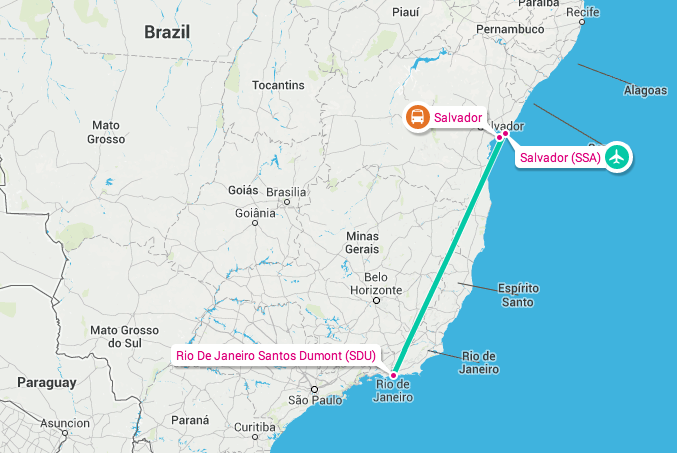
Two hour flight from Salvador to Rio: map credit Rome2Rio

Two hour flight from Salvador to Rio: map credit Rome2Rio

In lieu of a 27+ hour bus ride from Salvador to Rio, we opted for a two hour flight, then took a taxi to our hostel in the Catete neighborhood (pronounced “kah-tetch”). Aaron’s email is below:

Q:  Before this trip, you told your parents that you wouldn’t go to Colombia and that you wouldn’t go to the favelas in Rio.  And you’ve broken both of those promises now, haven’t you?

A:  Well … yeah.  But when I said those things, I didn´t know that there were safe, well-organized, fascinating favela tours.

The favelas (again trying not to sound like a Wikipedia entry) are these huge shantytowns built into the hills, areas the government has basically given up on, areas with no infrastructure, areas controlled by drug dealers (our favela was run by a gang with the very un-gangsta sounding name “Friends of Friends,” which I guess does sound a little Mafia-like).  It sounds horrible and lawles, but really there is less petty crime in the favelas because the drug dealers won´t allow any non-drug-related crime (they don´t want the police to have an excuse to raid the favelas.

Since this kind of area is obviously fascinating, tours have sprung up recently, all of which work with the communities they visit, and give a lot of money back.  As a result, we felt very welcome the whole time we were there.  And safe.  Our guide even made fun of our disposable camera, thinking we considered it too dangerous to bring a digital one.  Of course, our digital was still broken, which is too bad, since every view in the favela has enough texture to be an award-winning photograph.

Anyway, our favela, Rocinha, was the largest in the city, with over 200,000 people, all of whom appeared to be siphoning electricity from one mid-sized generator at the top of the hill.  Since the favela is surrounded by rocky cliffs on one side and a national park on the other, there is no room to build but up.  As a result, there are no roads in the favela, just an endless series of tunnels and catacombs leading in all directions.

Favela da Rocinha: photo credit Scott Hadfield

Favela da Rocinha: photo credit Scott Hadfield

Q:  And, after months of bashing your head on pretty much every hanging thing in South America, were you finally able to use your freakish height for good in the favela?

A:  Surprisingly, yes.  Our tour spent a fair amount of time in the day care that the tour sponsors, where we played with the kids and generally smiled at everyone.  While there, I was able to reach a ball that was stuck between some wires.  So, y´know, I guess I wasn´t TOTALLY imposing on South American culture the ENTIRE time I was there.  Now someone bring me a caipirinha.

Q:  Um … there’s no one here.  Anyway, what’s up with the hang gliding?

A:  Soon, hopefully.  The cliffs around the city make for excellent hang gliding, with a view of the city, the ocean, and the jungles all at once.  We were supposed to go yesterday, but there was no wind, so we went to Copacabana Beach instead.  We rescheduled for this morning, but the clouds were too low, so we went up to the Christ the Redeemer statue instead.  Now, we hope to go tomorrow.

Q:  Copacabana?  Christ the Redeemer?  Those are some pretty solid backup plans.  Want to talk about them?

A:  Copacabana, despite being one of the most famous beaches in the world, was only average in terms of beach quality, though there were a series of incredibly complex sand sculptures commemorating the 2016 Olympics.  It was like Old Yankee Stadium … you go for the mystique, not the actual experience.  And, since we´re staying only three Metro stops away in the Catete neighborhood (first time on a South American subway … yeah!), it´s easy to stop by for an afternoon.

The Christ statue is probably even more famous, and you can tell by the dozens of camera-waving tourists all trying to pose for the exact same picture in front of it.  Still … huge statue on a cliff overlooking the city = cool thing to see.  Not much more to say about it, really.
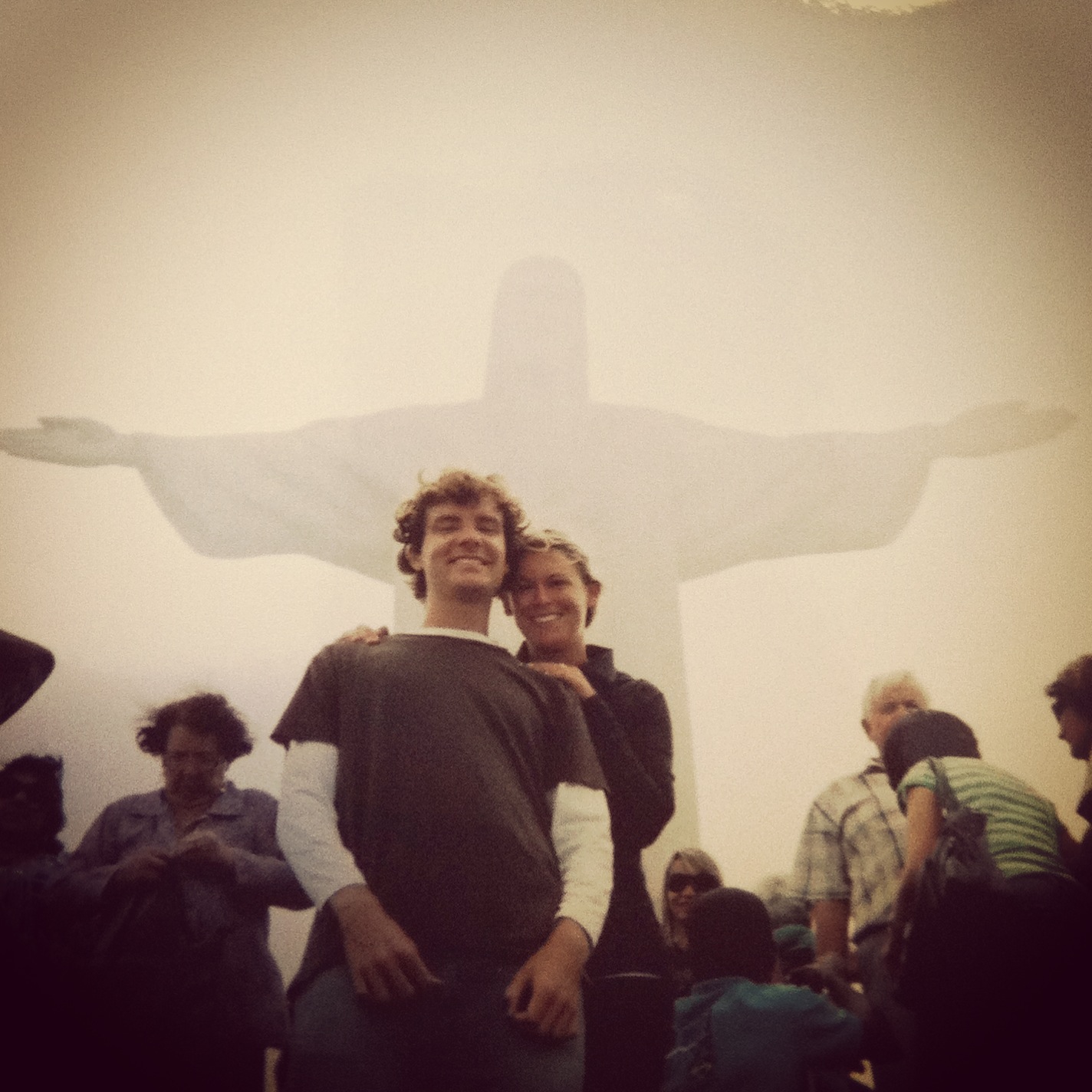
We actually have a photo from this! (Taken on a disposable camera, ha!)
We actually have a photo from this! (Taken on a disposable camera, ha!)

Continue reading

Real Honeymoon: Sonoma, Kauai & South Korea

Not only does the multi-leg itinerary make this honeymoon incredibly unique, but it’s also the first one that I’ve ever come across that involves both sets of in-laws! Read all about Jane and Sean’s one-of-a-kind honeymoon in wine country, Kauai, and South Korea below:

When and where did you honeymoon?

We had three legs to our honeymoon (Sonoma, Kauai, and South Korea), and we left the very next day after our wedding [May 11, 2014]. It was ambitious on our end, but we wanted to maximize the number of hours we had on actually enjoying our first destination rather than spending the precious time on a plane. Needless to say, we were two very, very, very tired (and hungover…) passengers on our flight [from Chicago] to California.

Healdsburg Honeymoon

Wine Country!

Kauai Honeymoon

Kauai!

South Korea Honeymoon

South Korea!

How long was your trip?

We spent three nights in Sonoma, six nights in Kauai, and five nights in South Korea.

hawaii honeymoon

How did you decide on your honeymoon destinations?

My in-laws have always wanted to visit Northern California (specifically, wine country) so we thought, “let’s go there first and invite them along!” So, we spent the first leg of our honeymoon with them in beautiful Sonoma (specifically, the adorable town of Healdsburg). If anyone is planning a trip to wine country, I would highly recommend staying at Hotel Healdsburg. Perfect location, exceptional hotel staff, and intimate (without being too quiet) ambience.

Healdsburg honeymoon

We live in Chicago so our Norcal destination was “on the way” to the second destination of our honeymoon (Kauai) which segmented the overall flight time. Kauai was an easy pick for us because that is our favorite of the Hawaiian islands. We’d both been there separately as kids so we were excited to explore the beautiful island together as adults. And, of course, Kauai did not disappoint!

Kauai honeymoon

As for the last and final leg of our honeymoon, we chose South Korea as Sean had never been there before and because every husband should see where his wife was born/raised! My parents joined us for this leg of the trip and they planned out the entire itinerary for our stay there. Since the majority of my extended family still reside in South Korea, my parents also planned a second wedding reception while we were there so that extended families who couldn’t make it to our Chicago wedding could attend. :)

south korea honeymoon

The best part about our honeymoon was…

Risking the fear of sounding too corny and mushy, the best part of our honeymoon was that we were ON our honeymoon. We were both bitten by the travel bug at an early age so we’ve both (together and separately) had significant travel logs under our belts. But, there is something so special and charming about being on your first trip as husband and wife. Even the most mundane activities such as enjoying a cup of coffee in the morning from the balcony of your hotel is novel and sweet. However, If I had to pick a single activity of our honeymoon that stood out the most, I’d have to say it was the 17-mile kayak tour along the Napali coast. Absolutely breath-taking.

napali coast

Kauai

kauai

Continue reading

Fond Memories of Brazil 2009: Salvador

Ah, Salvador. Despite what you may hear about the city in terms of safety, we had an awesome experience in Salvador and it ended up being one of our absolute favorite destinations in South America. If you’re going to Brazil, do yourself a favor and spend a few days soaking in the culture of Salvador! The excerpt from Aaron’s 2009 email is below:

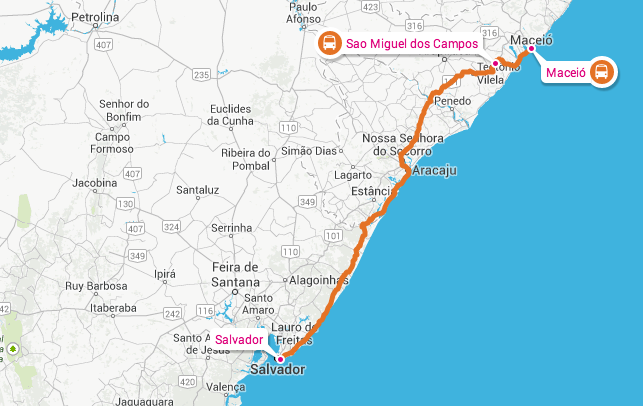
Our 6 hour bus ride from Macéio to Salvador. Map credit: map credit Rome2Rio

Our 6 hour bus ride from Macéio to Salvador. Map credit: map credit Rome2Rio

Q:  Let´s start at the beginning.  You guys got off the beaches and got cultural this week.  When we left off, you were about to get on the midnight bus to Salvador.  Take it from there.

A:  The midnight bus to Salvador was the best of our many overnight trips, thanks to some coma-inducing cough syrup we picked up in Macéio.  The world looks better when you sleep.  Upon arriving at our hostel, we met Russell, the owner, who would prove to be, without a doubt, the most informative and helpful person in all of South America.  Within an hour of meeting him, we had carefully labeled maps of all important parts of the city, a list of good nearby restaurants, and a pretty much complete schedule for our three days in Salvador.  Also, he had a beagle named Snoopy.  And the hostel offered one free caipirinha per day.  We loved Russell, and everything about that hostel.

Pelourinho, Salvador: photo credit Tatiana Coutinho

Pelourinho, Salvador: photo credit Tatiana Coutinho

We also met a fascinating cast of characters at the hostel, and soon we were doing almost everything together.  They included a nineteen-year-old guy from New Zealand currently living in Buenos Aires (bear in mind that at nineteen I don´t think I could cross the street without adult supervision), a guy from Rhode Island in the process of moving to Salvador to work on his Ph.D dissertation in Ethnomusicology, and two girls from Boise, Idaho, one of whom had a job selling plants which apparently allowed her to work three months out of the year and take the rest of the year off, the other an artist who worked mostly in the medium of teapots, her most famous work being titled “Sneaky Jesus.”

Q:  “Sneaky Jesus”?

A:  Apparently this was a teapot sculpted to look like a statue of Jesus, and in said statue He is trying to conceal the fact that he is eating a hot dog.  The inscription on the inside of the pot reads “Hey now, is that kosher?”

And again, this is a teapot.

After meeting these two (the plant seller also seemed to know quite a bit about the Boise break-dancing scene), I am now convinced that Idaho is the most creative, independent-thinking place on Earth.  Also, the Boise State football field is blue.  Go Broncos!

Cool Idahoan friends in Salvador

Cool Idahoan friends in Salvador

Q:  And with this crew, you explored basically the whole of Salvador, or at least all the places Russell said you should go.  What kind of city is Salvador?

A:  I guess the key adjective is “Afro-Brazilian.”  Salvador was the first part of Brazil discovered by Europeans, so it became the first capitol and also the main slave trading port.  Without reading like an encyclopedia entry on Brazil, here are a few of the cool historical things we checked out:

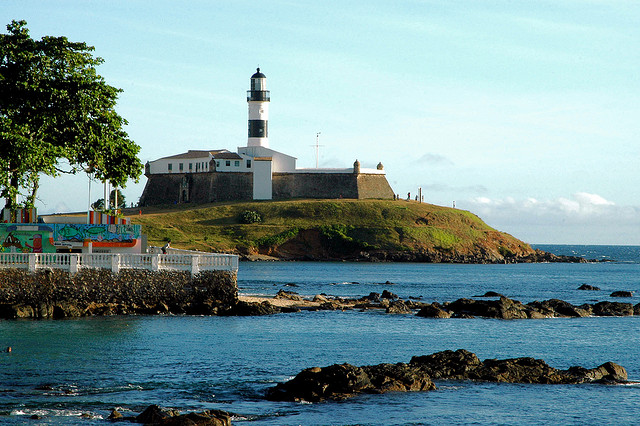
Bahia Lighthouse: photo credit Jota Freitas

Bahia Lighthouse: photo credit Jota Freitas

  • The First Lighthouse Ever Built in South America – dating to the 1550s, the lighthouse also holds a maritime museum, which was interesting in that it´s fun to try to imagine a world in which Portugal, Holland, and Belgium were major world powers, as they were in the sixteenth century when they fought for control of Salvador.
  • The Church of Sao Francisco – huge, gaudy, gold-embossed cathedral whose spiritual value was mostly overshadowed by the fact that it was built by slaves.  The slaves, apparently masters of the passive-aggressive practical joke, got back at their Catholic masters by occasionally sculpting pregnant angels into the architecture.  I´d say that pretty much evened the score. There are also a series of paintings illustrating parables, though their explanations made no sense.  For example, there would be an illustration of a woman spilling what appeared to be a basket of buttons, and the translated parable would read, “The middle road is the wisest.”  We spent most of our time at the church making up our own explanations, all of which seemed hilarious at the time, but now just seem equally ridiculous.
  • Afro-Brazilian Museum – a place we went to for roughly fifteen minutes on our last day because we were out of time and had a plane to catch.  Looked cool, though.
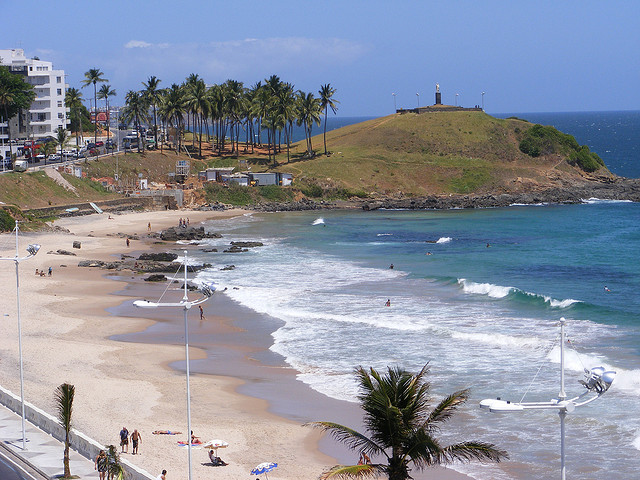
Beautiful Salvador: photo credit Rafael Ramires

Beautiful Salvador: photo credit Rafael Ramires

Q:  And, at one point, did you see a guy light himself on fire?

A:  Yup.  The coolest cultural thing we did was attending a traditional dance show, which was so much fun that it gets its own paragraph.  Normally, “traditional dance show” would sound kind of lame, but we´ve learned that the prefix “Afro” makes everything cool.  It started out with a lot of trancelike shaking and yelling, which was interesting just for how weird it was, but then a guy came out dancing with bowls of fire in his hands, and another balanced on his head, while we sat in the front row of the crowd, close enough to feel the heat.  He then proceeded to reach into the bowl, grab the substance that was on fire, and rub it all over his body.  He also put it in his mouth.  Seriously, I have no idea how he is still alive.

The show then moved into a demonstration of capoeira.  Now, even though capoiera is decently well-known (in fact, at least on person on this email list has taken capoiera lessons in San Francisco), I´m still going to talk about it at some length because I´m fascinated by it.  Capoiera started out as a traditional form of martial arts in Africa, but it was banned by the slave owners in Brazil.  The slaves still wanted to do it, but they knew that if they hit each other in combat, it would leave marks, and the slave masters would know they had been practicing capoeira.  So they kept everything the same, except they eliminated all touching.  So they still kick each other in the face, but train their feet to stop millimeters before impact.

Think about how much trust that requires:  “I´m going to come at you, and I want you to come as close as you possibly can to kicking me in the face, knowing that if your foot does accidentally make contact, my master may kill me.”  Now that is intense.

Anyway, the show was incredible.

Pelourinho, Salvador

Pelourinho, Salvador

Continue reading

Fond Memories of Brazil 2009: Natal + Maceió

FIFA World Cup 2014 starts tomorrow! In its honor, today’s post is about our stays in Natal (one of the host cities) and Maceió. Enjoy!

After several incredibly relaxing days in laid-back Jericoacoara, Aaron and I eventually decided it was time to leave paradise and continue our journey down the Brazilian coast. Our destination by default became Natal, the next large coastal city with beautiful beaches. We hopped on an overnight bus ride headed south, and arrived in Natal about 8 hours after departing from Fortaleza.

Our route from Jeri to Natal: map credit Rome2Rio

Our route from Jeri to Natal: map credit Rome2Rio

Fortunately, we were much more impressed with Natal’s city beaches than we were with Fortaleza’s, so rather than make the trek to nearby Praia da Pipa (which is apparently awesome and very similar to Jeri), we decided to stay in the main part of the city. But if you have time to kill in Natal between World Cup matches, I’d definitely recommend a quick Pipa trip!

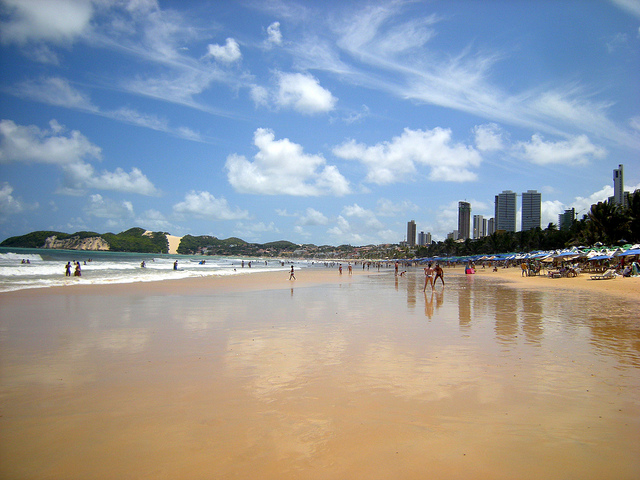
Our days in Natal were spent eating açai bowls on the beach, watching a local surf competition, and walking around the coastal Ponta Negra neighborhood. All in all, we may not have had any culturally important experiences during our short stay in Natal, but we were certainly happy to be there. Oh, and we treated ourselves to a delicious rodizio shrimp dinner on our last night in town… which also happened to be Yom Kippur. (Sorry, Mom!)

Praia de Ponta Negra: photo credit Leandro Neumann Ciuffo

Praia de Ponta Negra: photo credit Leandro Neumann Ciuffo

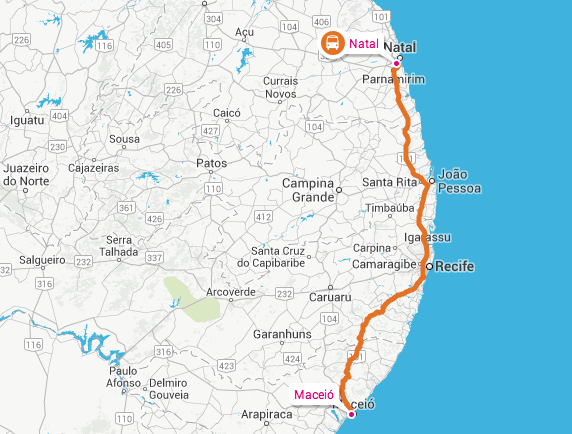
Our next stop after Natal was Maceió, home to some of the absolutely most beautiful city beaches that I’ve ever seen. Why did we decide to stop there? Do a quick Google Images search for “Maceió” and the color of its water will speak for itself. We jumped on another overnight bus in Natal and arrived in Maceió about 9 1/2 hours later.

Another overnight bus ride from Natal to Maceió: map credit Rome2Rio

Another overnight bus ride from Natal to Maceió: map credit Rome2Rio

Because our digital camera stopped working while we were in Natal, our days in Maceió were spent between 1) looking for a camera-repair shop, 2) looking for an internet cafe to search for said camera-repair shop address, and 3) making exclamations about the gorgeous turquoise water.

Despite its beautiful municipal beaches, Maceió was, at least in 2009, definitely not set up to be a tourist destination, which really caught Aaron and me off guard. All of the tourist-friendly things that we’d come to expect (plentiful hostels/hotels, internet cafes, various day-tours, etc.) were missing. We hardly saw any other travelers around, let alone any Americans. It was actually pretty mind-boggling to us that a city with such incredible beaches could attract so few foreigners. We thought must have just visited during an off-season, because surely Maceió had to be popular with backpackers heading down the coast of Brazil; we just must have missed them… right? But several weeks later in Rio, when we mentioned our stay in Maceió to a Brazilian who was from there, he was absolutely shocked that we Americans visited his hometown.

Praia de Pajuçara boardwalk, Maceió: photo credit Dario Sanches

Praia de Pajuçara boardwalk, Maceió: photo credit Dario Sanches

Despite the lack of tourism infrastructure, I ‘m still glad that we stopped in Maceió. Especially in retrospect, I think it’s pretty cool that we were able to experience a city that so few Americans choose to visit. It’s also really crazy to think about how dependent we once were on internet cafes back then! What are we, dinosaurs? Alright, alright, enough blabbing from me. I’ll let Aaron’s email take it from here.

Q: Tell us about the drive from Fortaleza to Natal.

A: The drive, if I had to describe it in one hyphenated adjective, is: trash-strewn. Honestly, every plastic bag mankind has ever used, all throughout history, winds up on the side of the road in northern Brazil. With the incredible beaches and the beautiful people and the soccer dominance and whatnot, you can forget how much of Brazil is a poor and dirty place. I know all countries are like that, too a point, but wow … when you see it, you understand.

Continue reading

Real Honeymoon: Paris, The Maldives, Singapore, Hong Kong & Japan

Yes, you read the title correctly. This week’s real honeymooners went to Paris, the Maldives, Singapore, Hong Kong, AND Tokyo on one of the most amazing honeymoons imaginable. My friend Danny and his husband Graham travel frequently and very well, so of course they had to really step it up even more for their recent honeymoon. Read all about their ultimate multi-moon below:

When and where did you honeymoon?

As a global traveler on a regular basis for work and a huge airline “dork,” I wanted a honeymoon that would allow me to travel on a wide variety of airlines (in first class, of course) and to at least one exotic location that I had never been before. Fortunately, my now husband was on board with my ambitious plans and we settled on a pretty crazy itinerary.

maldives honeymoon

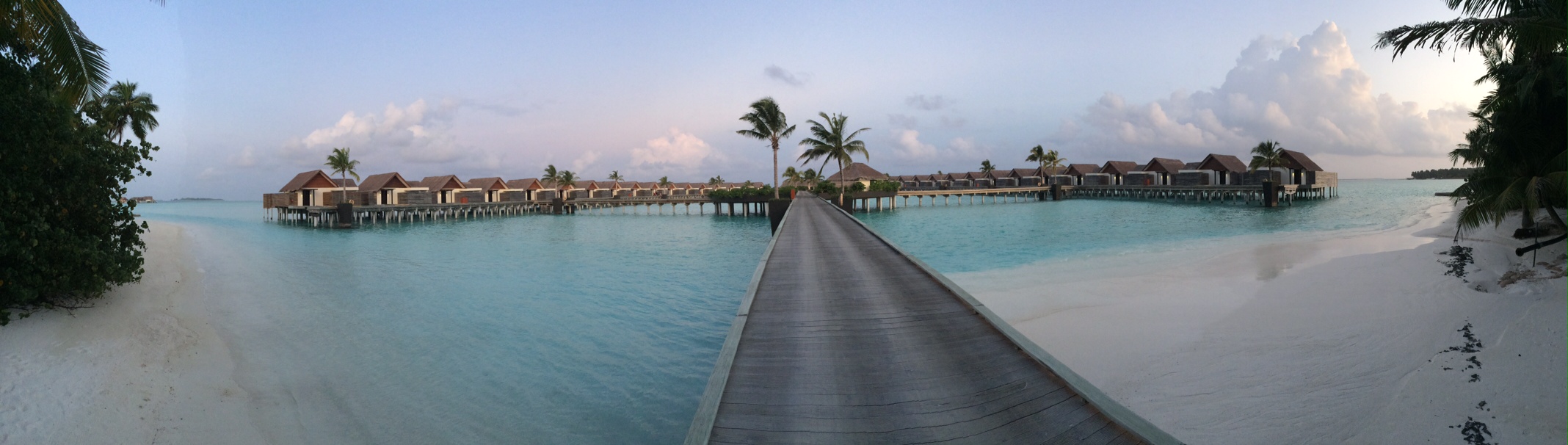
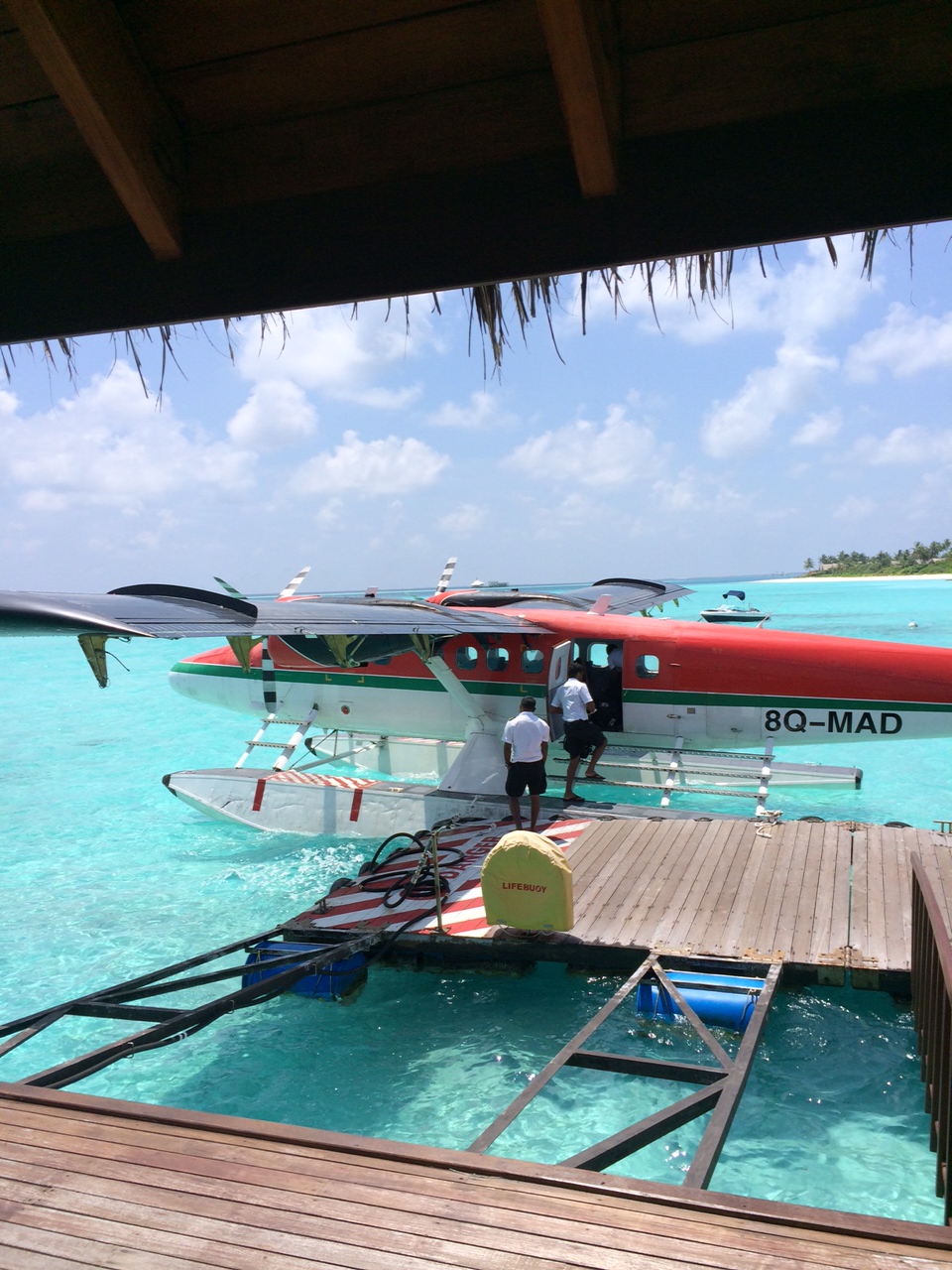
In the end, we went to Paris (Westin Vendome) , the Maldives (Niyama Maldives), Singapore (The Ritz-Carlton Singapore), Hong Kong (The Hotel Icon) and Tokyo (The Peninsula), experiencing Suites class on Singapore Airlines, First Class on Lufthansa and Thai Airways and business class on ANA, including a trip on their new Dreamliner.

maldives

How long was your trip?

To keep the wedding/honeymoon as one celebration, we left on our honeymoon the Sunday after our wedding and spent roughly two weeks traveling (May 2014).

maldives honeymoon   maldives honeymoon

How did you decide on your honeymoon destinations?

For as long as I can remember, my number one criteria for my honeymoon was spending at least part of it on an overwater villa someplace tropical. Since Graham and I have been together (over 6 years), our favorite memories have been our tropical trips, sitting on a beach, drinking something fruity, and gorging ourselves with beach/pool side food. As such, he was more than happy to indulge me once again in this dream, so the focus became finding the best overwater bungalow we could.

maldives honeymoon   maldives honeymoon

We narrowed it down to Tahiti and The Maldives, but ultimately decided on The Maldives, as it was easier to get there for free with my miles and there seemed to be far more options with extra perks, like personal infinity pools and underwater nightclubs, that Tahiti did not seem to offer.

The other destinations were picked more based on getting to and from the Maldives with miles, maximizing our time in First Class, and getting to destinations where we knew the food would be amazing (our other big criteria).

tokyo honeymoon

asia honeymoon
   singapore honeymoon

The best part about our honeymoon was…

We may differ on this, but other than the amazing flights, and beautiful Maldives, I have to say the best part was just spending 2 weeks together, with no one else and no other distractions. It was the longest time we had spent together, just us, and it was pretty amazing. Über emo, I know. Hopefully you aren’t all throwing up now….

first class honeymoon   paris honeymoon

Continue reading

Real Non-Honeymoon: South Africa (Part 2)

Monday’s blog post was mostly about my sister Elisa’s awesome safari experience in South Africa. Read on to learn about her favorite restaurants and things they did in and around Cape Town.

_____________________

Cape Town:

During our time in South Africa we spent 5 days in Cape Town and absolutely loved it! Below is a list of our Cape Town favorites.

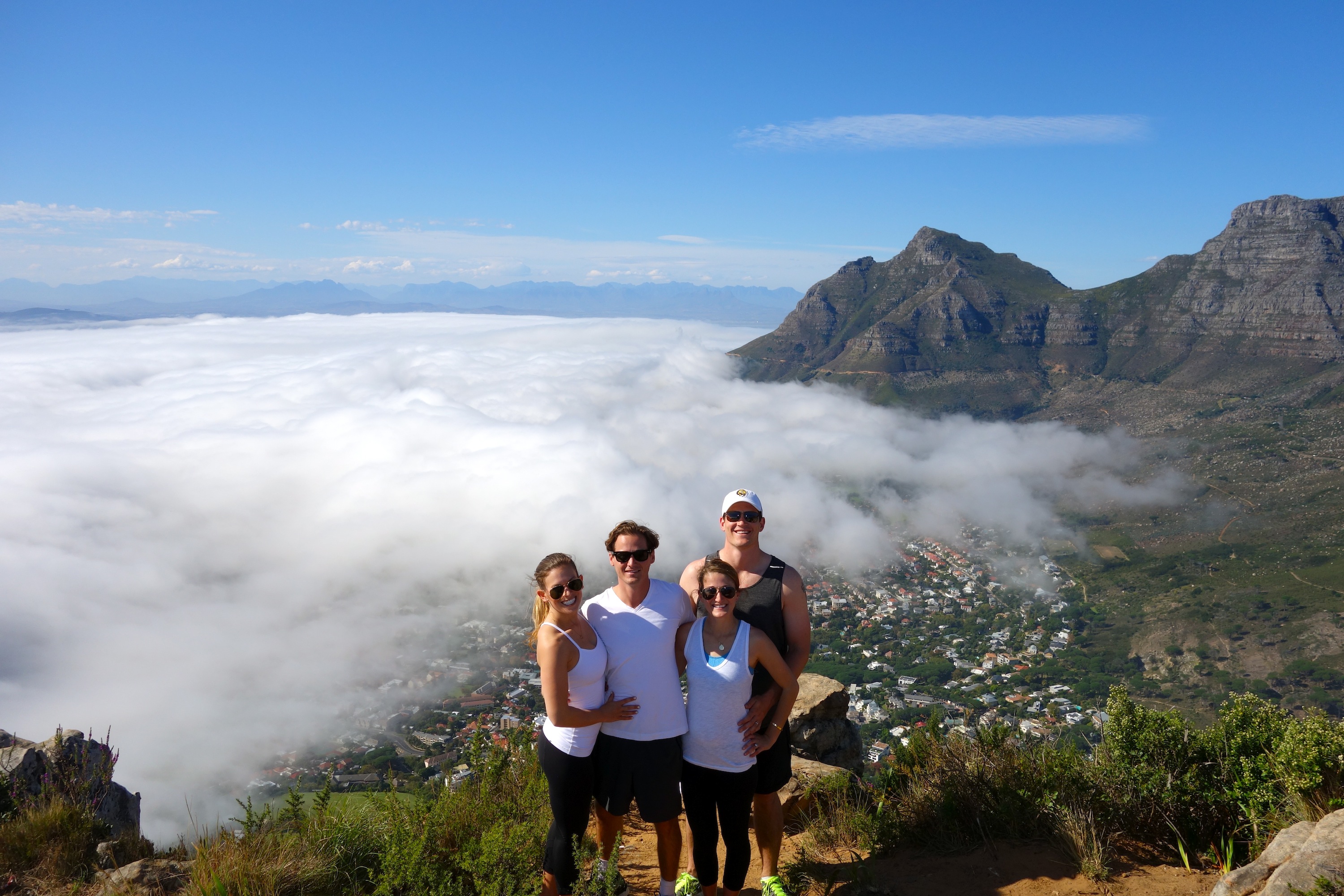
Group shot at the top of Lion's Head

Group shot at the top of Lion’s Head

Dining:

  • The Grand Café & Beach: Casual, shabby-chic waterfront dining on the beach in Cape Town. The perfect place for lunch and/or cocktails near the V&A Waterfront.
  • Paranga: Located in Camps Bay along the sunset strip of the Atlantic Seaboard. A modern and artsy location for sunset dinner and drinks with an ocean view.
  • Harbour House: Beautiful, waterfront dining, perfect for lunch or dinner. Amazing views, amazing décor, amazing food! (There are two locations and we visited the location in Kalk Bay during our drive around the Cape.)
  • The Roundhouse Restaurant: My boyfriend made our reservation at The Roundhouse Restaurant about a month prior to our trip. The Roundhouse is one of the country’s top 20 restaurants and located in a wooded valley overlooking Camps Bay. Our dinner was 7 courses, the menu was personalized with our names and the service was over the top! An extremely special dining experience! Also, arrive early for your reservation and enjoy a sunset cocktail in the gardens overlooking Camps Bay!
  • Gold Restaurant: A cultural and FUN African experience. I read of this restaurant on a previous Peonies to Palm Trees post and knew that I had to go! The night consisted of face painting, dancing, drumming and a 14-course traditional African meal! It was a wonderful evening!
Dinner (and makeover) at Gold Restaurant. Look familiar?

Dinner (and makeover) at Gold Restaurant. Look familiar?

Full-Day Drive of the Cape:

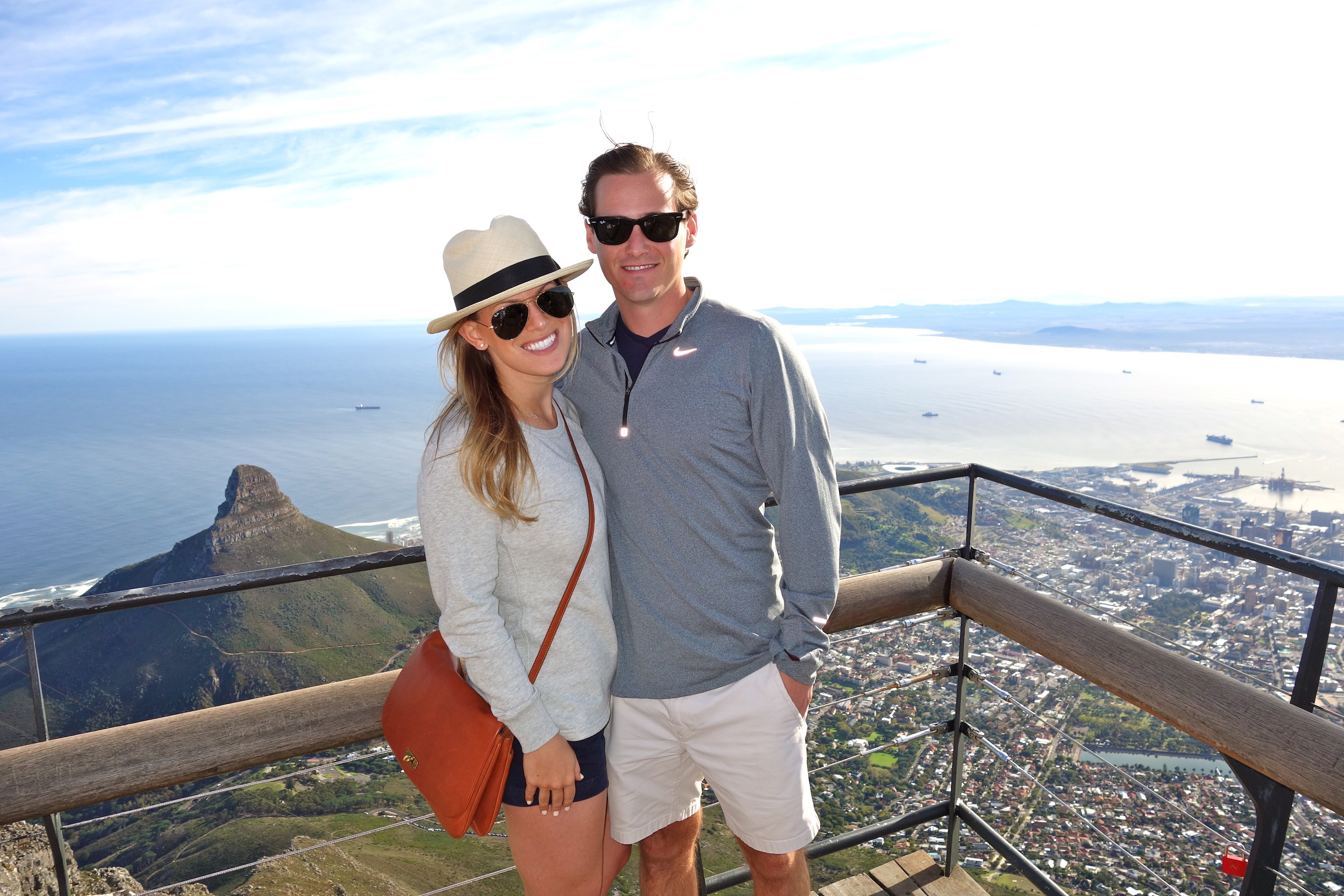
One of the best decisions we made was to hire a private driver and guide to take us on a full-day tour of the Cape! We started at Table Mountain where we took the cable car to the top. At the summit, we walked around, got a coffee at the café, and enjoyed the view.

Next, we visited the Kirstenbosch National Botanical Garden located against the eastern slopes of Table Mountain and acclaimed as one of the “greatest botanic gardens of the world.”

Kirstenbosch Botanical Garden

Kirstenbosch Botanical Garden

After, we drove through Muizenberg (cute surfer town, known for their colorful houses) to Kalk Bay where we stopped for an oceanfront lunch at Harbour House. Next, we proceeded to Boulder’s Beach in Simon’s Town, famous for their penguin colony. (Seeing the beautiful, little penguins on the beach in South Africa was definitely a trip highlight!)

Boulder's Beach Penguin Colony

Boulder’s Beach Penguin Colony

Penguins deserve TWO photos

Penguins deserve TWO photos

We then cut across and continued around the cape to Hout Bay where we stopped at Chapman’s Peak to enjoy the incredible view as the sun was setting. Lastly, we ended in Camps Bay/Clifton for a sunset dinner at Paranga!

Beautiful view of Hout Bay

Beautiful view of Hout Bay

Continue reading

Real Non-Honeymoon: South Africa (Part 1)

My sister Elisa wrote a really great blog post about her Los Cabos trip last year, so I asked her to write another one about her amazing recent vacation in South Africa. (I also just want to live vicariously through her travels.) Elisa had so much good stuff to say this time around that I decided to break her post into two parts. Today’s post covers her incredible safari experience, and on Wednesday I’m going to publish her Cape Town (and surrounding areas) recs.

View from the top of Table Mountain

View from the top of Table Mountain

When and where did you travel?

My boyfriend and I traveled with his family throughout South Africa in April/May 2014. (Johannesburg, Phalaborwa, Kruger National Park, Sabi Sand Game Reserve, Dinokeng Game Reserve, and Cape Town).

Safari sunrise group shot

Safari sunrise group shot

How long was your trip?

Our trip was 16 days.

Safari sunset

How gorgeous is this safari sunset?

How did you decide on your travel destination(s)?

My boyfriend and I wanted to plan an international trip in 2014 and South Africa was always at the top of our wish list. My boyfriend’s dad was born and raised in South Africa, and the majority of his relatives still live there.  Our decision was solidified when we were invited to his cousin’s May 2014 wedding in South Africa!

The best part of our trip was…

Exeter River Lodge in the Sabi Sands Game Reserve and Cape Town.

Main Lodge at Exeter

Main Lodge at Exeter

Exeter River Lodge:

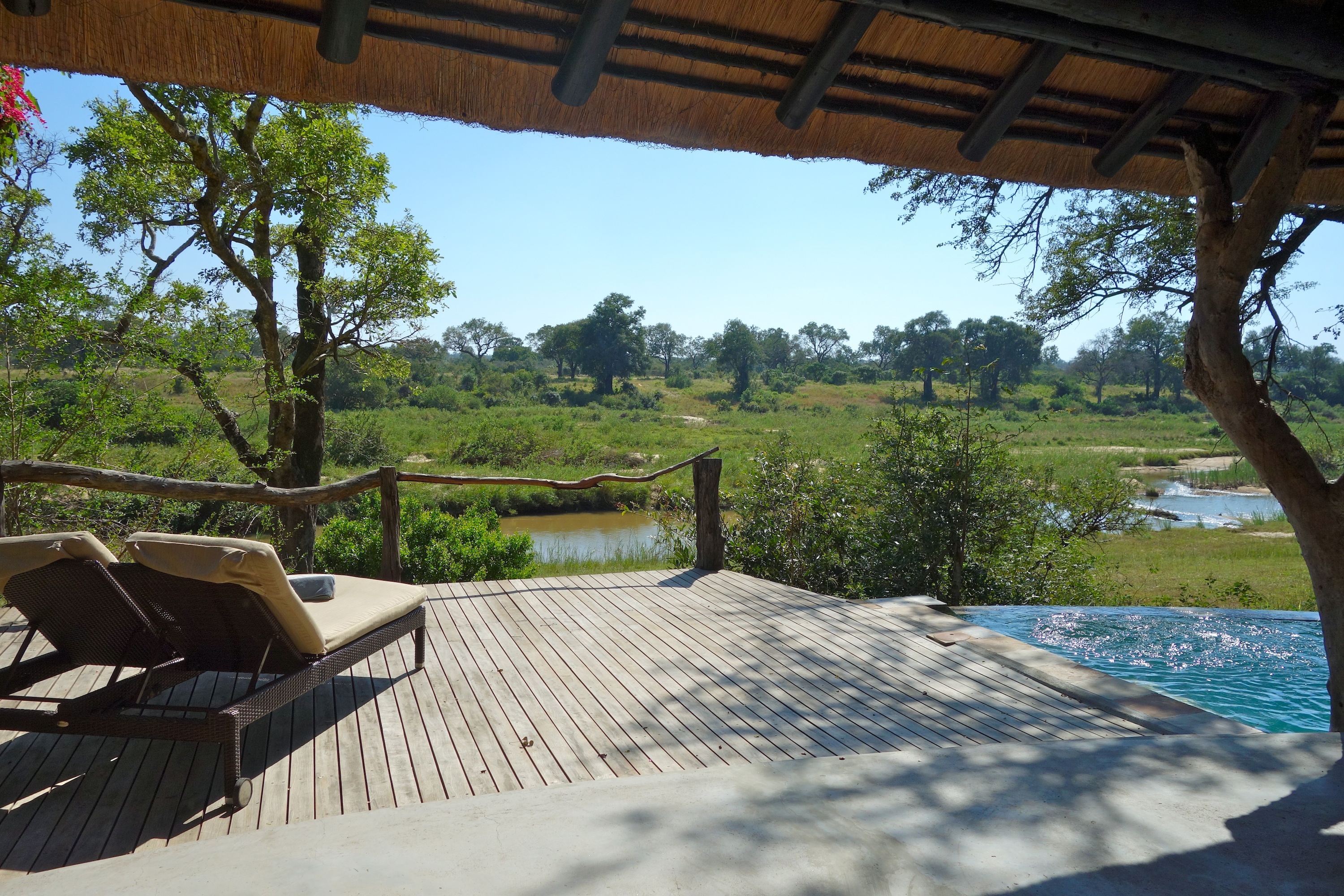
Exeter River Lodge in the Sabi Sand Game Reserve was unlike anywhere I had ever been, and we had the most incredible experience. The grounds were immaculate, the safari drives were remarkable, the meals were outstanding, and my boyfriend and I had the most stunning private rondavel along the Sand River.

Deck of the private rondavel

Deck of the private rondavel

We took two game drives per day; one in the morning at sunrise and the other in the evening at sunset, with each drive lasting approximately 3-4 hours.  Our Guide and Tracker were extremely knowledgeable, professional, resourceful, personable, and fun! We saw all of the “Big Five” (Lion, Leopard, Elephant, Rhino and Buffalo) plus more! Two of my favorite moments included observing a Lioness roar and her 8 cubs cuddled together at sunset and a herd of approximately 30 elephants (including a baby) crossing a riverbed directly in front of us. It was amazing how close we would get to the animals!

Animals of Africa

Animals of Africa

Continue reading

Fond Memories of Brazil 2009: Fortaleza + Jericoacoara

The second installment of my “Fond Memories of Brazil 2009″ series is all about Fortaleza! Okay fine, not so much about Fortaleza as it is about one of the greatest places we’ve ever visited: Jericoacoara.

Paradise Lagoon in Jericoacoara: photo credit Jonathan Hood

Paradise Lagoon in Jericoacoara: photo credit Jonathan Hood

After our interesting Amazon river experience, Aaron and I were eager to get back on the Gringo Trail and relax on a beach. We’re not saying that we deserved a vacation or anything, but being on a crowded hammock boat for an unknown amount of time with minimal food surrounded by people we could hardly communicate with was a bit stressful. Oh, that combined with the fact that some scary witch lady in Belém ripped a necklace off of my neck while I was walking down a busy street in broad daylight. (It was pretty freaky.)

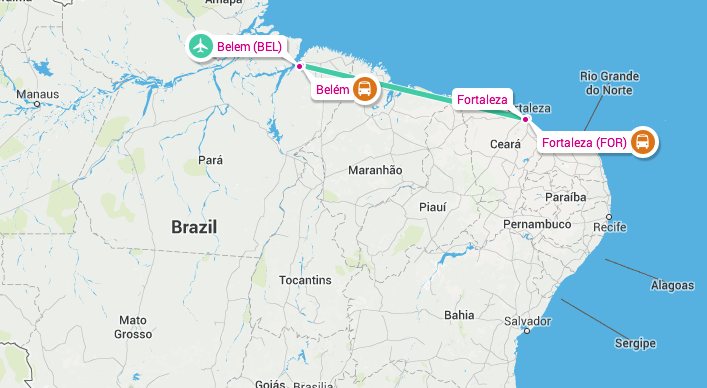
So, yes, relaxing beach time felt necessary. Looking at our map, Fortaleza was the next big beach town south of Belém, so that became our destination by default. But don’t let maps of Brazil fool you. It may look like two destinations are relatively close to each other, but in reality those “short” distances are almost always a 24+ hour bus ride (approximately $80). We opted for a $200 five hour flight instead.

Map credit Rome2rio

Map credit Rome2rio

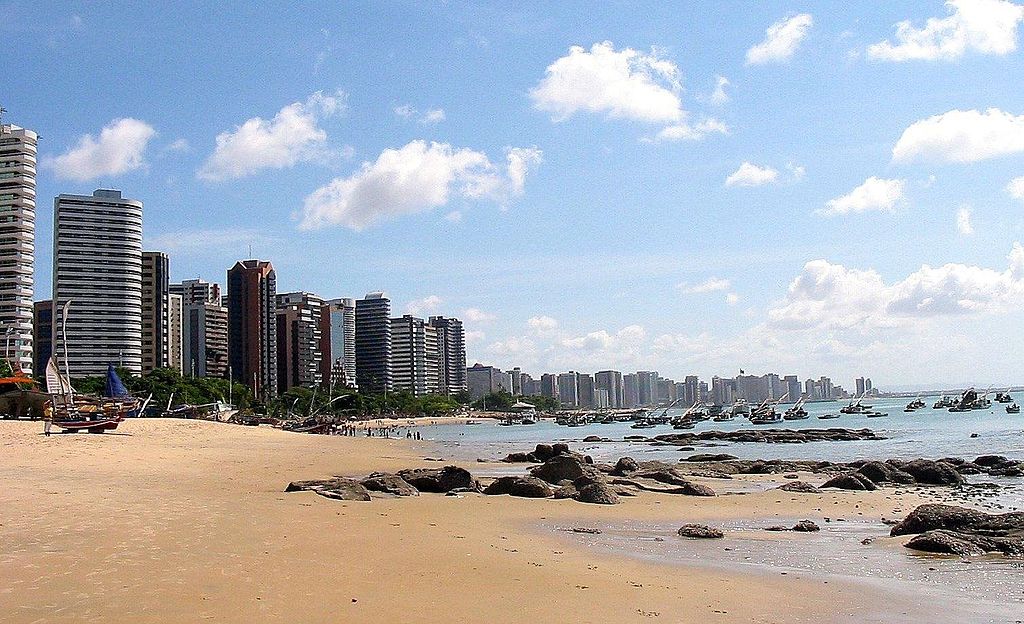
I think we had originally planned to do a few days in Fortaleza before heading to either Jericoacoara or somewhere south, but it became quickly apparent that the city beaches were not as idyllic as we had hoped. So rather than spending a few days wishing we were somewhere else, we only stayed in Fortaleza one night before starting the trek to Jeri. 

Praia do Mucuripe, Fortaleza: photo credit  Rafael Ramos and David Andrade

Praia do Mucuripe, Fortaleza: photo credit Rafael Ramos and David Andrade

If there’s one thing that you take away from this blog post, if you’re anywhere near Fortaleza GO TO JERICOACOARA! I’ll let Aaron’s email explain how awesome it was:

Q: You landed in Fortaleza and stayed there about six hours before heading North to the small beach town of Jericoacoara. Big cities, small towns, South, North … I have to ask: How do you guys choose your destinations?

A: I gotta say, it´s almost totally random. We have two guidebooks, so those are somewhat useful. A personal recommendation by a fellow traveler goes a long way. Mostly though, we´re doing it on instinct, and it´s amazing we´ve had as much luck as we have.

Basically, we arrived in Fortaleza, and it looked way too much like Belém for our liking. Though no one we knew personally had ever been to Jericoacoara, most people had positive things to say about it, and it was on a list of “Brazil´s Best Beaches” Ilana found online. So that´s it. We were on the bus.

Q: And, when the historians ask, you´ll tell them your trip´s low point was right about here, right?

A: I think so, yeah. The bus trip was billed as five hours, with a sixth hour in some kind of 4 wheel drive vehicle over some sand dunes to the town itself, but after six and a half hours, we were still on the first bus. We try to take direct buses when possible, at least buses that advertise that they make very few stops. At night, this works out okay. During the day, however, “direct bus” means that the driver picks up every person who looks like they could maybe use a lift anywhere. And there are no freeways in Brazil, so we´re constantly passing through towns, slowing for speed bumps and intersections, and literally picking people up, taking them three blocks and then dropping them off. Do these people have tickets? Do they have to pay at all?!?

Honestly, it´s about as much fun as picking up the 38 bus at 6th and Clement and taking it to, I dunno, Fresno.

Then we got on the dune travel vehicle, which looks like part of the ride from Disney´s Safari Adventure, and that thing takes off, bumping around like crazy, and we´re actually going BACK DOWN the road we´d just traveled by bus, and a little bit of my soul died. I thought back on the last two weeks, all the time since we´d entered Brazil, and all I could see was: Mototaxi-Plane-Bus-Taxi-Boat-Taxi-Bus-Bus-Boat-Taxi-Plane-Bus-Disney´s-Safari-Adventure-Vehicle. It was like we´d signed up for some kind of survey course on Modes of Transportation in Brazil, and I wondered if all this traveling was even leading somewhere, if we´d ever get to a place where we wanted to stay …

Q: And the couple in front of you weren´t helping anything, were they?

A: Oh lord. No. No they were not. Where to start? Well, they were some kind of nondescipt European, the guy hideously dessicated, like his skin had to be painfully stretched out to cover his face, the girl just homely, doughy, and pale. She was out of his league, just by not being freakishly ugly. And they just made out, hardcore, the entire time. Sloppy, slobbering makeout sessions, even as we traveled over some of the roughest terrain. Honestly, they pretty much destroyed my concept of romantic love forever. If Ilana is ever distant with me for any reason, I assume that she just can´t get the image of these two out of her head. Honestly. Physical intimacy is gross, isn´t it? And so I sat there, sleep-deprived and bouncing against a hard metal seat, and I tried not to look, but of course I couldn´t stop. This was the low point.

Q: And then … Jericoacoara?

A: And then Jericoacoara. And then, all of the sudden, I had nothing to complain about. After 90 minutes traversing huge sand dunes with nothing man-made as far as the eye can see, we came over a dune and there it was, shimmering like a mirage in the night, an impossible collection of everything I wanted a Brazilian beach town to be.

Ah, Jericoacoara: photo credit Jamie McIntyre

Ah, Jericoacoara: photo credit Jamie McIntyre

In Jeri, there are no roads. It is literally built on the sand dunes. Even in the businesses, there are no floors, only sand. Twenty years ago, this was apparently just another fishing village, like Alter Do Chao, with pristine beaches but nothing to do. At some point, though, it became a windsurfing and kitesurfing mecca, and so a town grew up out of nowhere in a three square block area, cheap hostels and restaurants with soft-lit patios and live acoustic music, beach shops and bars and internet cafes. I´m still not sure if it was real. I mean, there are no roads. How did all that stuff get out there? Just the basic building materials … it seems impossible.

We checked into an incredible hostel with wireless internet and free huge breakfasts and air conditioning and an owner who spoke English, and we paid less than half of what we paid to sleep in a hole in Belém. Our neighbors across the hall were x-ray technicians from Seattle, breaking our streak of 11 days without meeting a native English speaker. We went out for huge portions of pineapple shrimp, and I felt truly happy to be traveling for the first time in about a week. This was a place we could stay.

Continue reading

Fond Memories of Brazil 2009: Manaus + The Amazon

Welcome to the first many “Fond Memories of Brazil 2009” posts, just in time for the World Cup! I’ll start each of these posts with some of my own thoughts on the city, then I’m going to include excerpts from my husband Aaron’s weekly emails to our friends and family that he wrote during the trip. To make these emails a bit more engaging, he wrote all of them in a mock Q&A format. (In other words, he just interviewed himself… which confused my grandparents a lot.)

One more quick programming note before we get started: At the end of our South America trip, we actually lost one of our digital camera memory cards. It. Was. Devastating. Especially so because we had already missed a few weeks of photos when our camera stopped working midway through Brazil and we found out the hard way that electronics in Brazil are outrageously overpriced. So that explains the lack of amazing photos to go along with these blog posts. Sorry about that!

Alright, how did we end up visiting Manaus in the first place? That’s easy to explain. My friend’s older brother had once told me that the ONE thing that he wanted to do next time he went to South America was take a hammock boat from Manaus to Belém. Because this friend of mine goes to South America a lot and seemed to know his stuff, we assumed that this was a “can’t-miss” activity. (Spoiler alert: we may have been wrong about that.) So we flew into Manaus with no plans other than to get ourselves on one of those hammock boats headed east.

Little did we know, this is what the hammock boats looked like  mik_p

Little did we know, this is what the hammock boats looked like: photo credit mik_p

Upon arrival at our hostel, we were happy to learn that they could secure hammock boat tickets for us the very next morning, so we only ended up spending one night in Manaus. Most of the time we just wandered around the city buying supplies for the boat trip and trying the local street food.

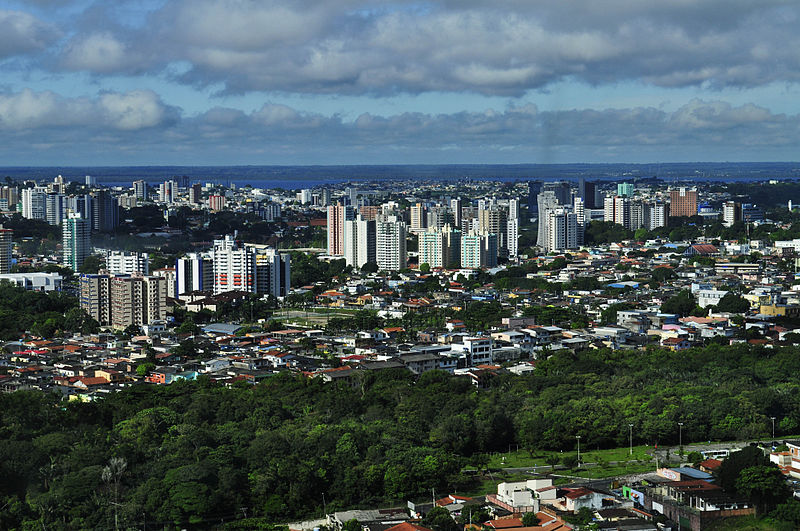
Aerial view of Manaus: photo credit Neil Palmer (CIAT)

Aerial view of Manaus: photo credit Neil Palmer (CIAT)

From what I recall of our quick Manaus experience, it just seemed like a typical big city… that just happened to be in the middle of the Amazon. Like if I hadn’t flown in and seen with my own eyes how much jungle and wilderness surrounded the city, I wouldn’t have been able to believe it myself.

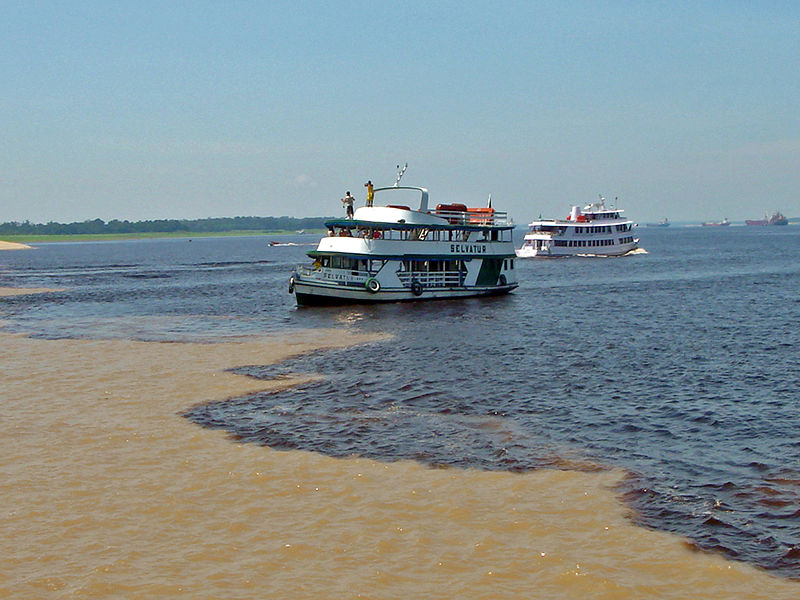
Meeting of the waters: via Mariordo

The “meeting of the waters,” where the black Rio Negro meets the sandy Amazon: photo credit Mariordo

But unless you’re going for either 1) an Amazonian adventure, or 2) the World Cup, I wouldn’t necessarily recommend going out of your way to visit Manaus. I’m sure the city had a lot more to offer than what we saw during our short time there, but there were so many other cities in Brazil that we liked a lot better. And as for the “can’t-miss” hammock boat adventure down the Amazon? Well, I’ll let Aaron’s email explain our experience, then you can decide for yourself whether you’d be up for it:

Q: So you flew into Manaus, the capital of the Amazon region, a surprisingly big city. What will be your main enduring memory of Manaus?

A: Sadly, it will be the bus station. Let´s explain. Crossing into Brazil, I feel a constant, blinding, drowning sense of helplessness. I know I poke fun at our lack of Spanish skills, but we know enough to get around, to bargain, to ask questions, to instruct a cab driver, etc. In a Spanish-speaking country, I know we will not simply die in the streets. In Brazil, it´s not so much of a given. Everyone who tells you Portuguese is just like Spanish is LYING TO YOU. They may look similar on paper, but you will not understand one word anyone is saying, and they will not understand your Spanish. At all.

So we got off the plane in Manaus, and succeeded in getting on a bus from the airport to the main bus terminal, where we hoped to transfer to another bus that would take us to our hostel. We got off at the bus terminal … and stepped into … something. There was one huge line, leading up some stairs and into a building … and this line NEVER MOVED. We were there for at least ten minutes, standing in the same place. Buses constantly stopped, and people got off, but no one ever got on. And the people who got off just got in our line and stood there. WHERE WAS THIS LINE GOING TO?!? Some of the buses appeared to be heading where we wanted go, but the drivers were emphatic that we could not get on. I don´t want to be the ugly American traveler, but if there was ever one time I wanted to yell “Does anyone here speak English?!? Can anyone tell me what´s going on?!?”, it was this moment.

Continue reading

Coming Soon: Lots of Posts About Brazil

Back in 2009, Aaron and I spent 2 1/2 glorious months backpacking all over South America. Because we spent the months leading up to our trip studying for the California bar exam, we didn’t have a lot of spare time to do any travel research in advance – all we had were flights into Peru in August and out of Argentina in October.

Boca Juniors v. River Plate at La Bombonera, Buenos Aires

Superclasico 2009: Boca Juniors v. River Plate at La Bombonera, Buenos Aires

Looking back on it, I can’t believe how unlike me it was to go into such a big trip practically blind! I remember emailing some friends who had been to South America before to see if they had any recommendations for us, but Aaron and I just figured that we’d make decisions for the most part on the fly once we arrived. This uber-casual spontaneous travel strategy worked out for the most part, but we probably could have saved a lot of money if we had made some of the major decisions in advance.

One of the things that we knew before our trip was that we wanted to spend a lot of time in Brazil. Americans need to get travel visas in advance to visit Brazil, so Aaron and I made a few trips to the Brazil Consulate in San Francisco with our bar books in tow.

Continue reading